John and Laura Ramsey write: The Pink Star Diamond

Late last year the world’s largest diamond rated by the GIA as Fancy Vivid Pink was up for auction at Sotheby’s. The piece fetched a record price in excess of $83 million but when it was all over the sale did not go through. The finished gem weighs 59.60 carats and is a little over 1″ long by about 0.80 wide. It is a beautiful oval and the color is amazing. With all the auctions going on all over the world bringing record amounts it seems that great gems are suddenly popping up to be available for the auctions.

Prior to the auction the Pink Star was shown at an exhibit at the Smithsonian named “The Splendor of Diamonds.” Along with the pink gem were some other fabulous diamonds: The Moussaieff Red Diamond, the DeBeers Millennium Star and the Heart of Eternity Diamond. What a wonderful showing of diamonds.

John and Laura Ramsey report: for “The Largest Diamonds” go to…

iStock_000035752022Small 

We’ve mentioned in the past that Saturn and Jupiter might be raining diamonds.  However, for the biggest diamonds we might have to travel event further.  Out of our solar system scientists believe there is a planet whose mass may be as much as 1/3 diamond.  Since the planet is so much larger than earth that 1/3 would equal about 2 earth masses!!!

Want even bigger?  More recently astronomers have just revealed that there is a dwarf star with the mass of our own sun which might just be one large diamond.  The dwarf star has the mass of our own sun but has collapsed in on itself and in the process turned itself into a gem of a star.   The weight in carats of diamond is estimated at 10 billion trillion trillion.

Astronomy has always been an interest of ours as have gems.  Who knew years ago that the two would converge to give us dreams of treasure beyond all measure?Diamond iStock_000035752022Small

John and Laura Ramsey report: Fabulous New Blue Diamond Found

Just last week it was reported by Petra Diamonds Ltd. that they have found what they’re calling an “exceptional” rough blue diamond whose uncut weight exceeds 122 carats. Wow!

As we reported recently, a cut and polished blue diamond just recently sold for a record sum—it seems that this new stone will break that record.

Even while it is still in rough speculation, it’s likely that the cut stone out of this piece will fetch in the neighborhood of $100,000,000. That’s one hundred million dollars.

Petra has apparently examined the piece and has declared that it is of exceptional clarity. The color is a nice but not as deep a blue as the Hope diamond.

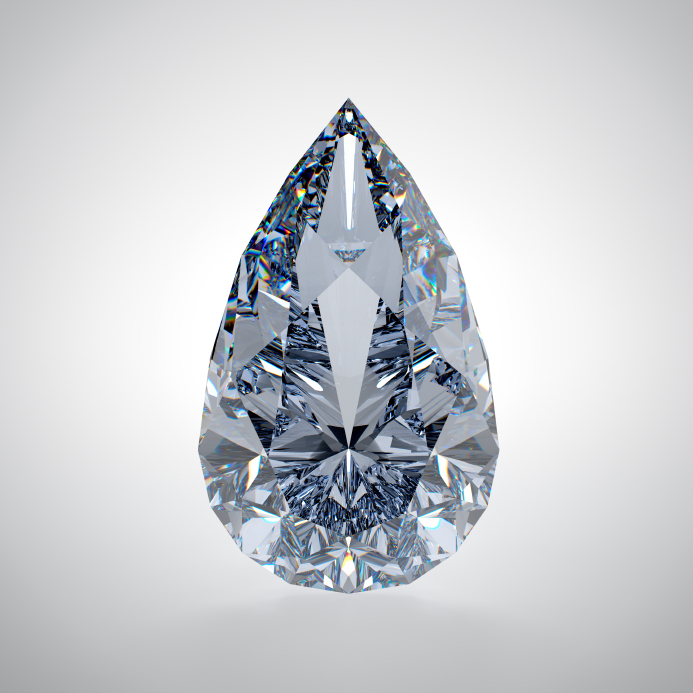
As a gem cutter I have looked at the photos of the rough piece and speculate that it might be cut into a pear shape. It would be nice to hold it in my own hands and look at it from every angle and then guess as to the cut into which it might be fashioned.

We’ll keep abreast of this story and let everybody know the outcome—the cut and the final price.
Diamond

John and Laura Ramsey report Gem News—

Exciting news this year in a world seeming somewhat depleted of fine colored gems: two great finds…

First, there has been found what may be a 50 ton boulder of Jadeite in Hpakant, Burma.  Depending upon what could be the final weight of the boulder and the quality of the jadeite therein a possible several billion dollar rock.  Yes, that’s billion with a “b.”

Also reported to be found is a new pocket of rubellite tourmaline in Brazil.  The mine—the famous Cruzeiro mine.  All the rough has already been sold.  The find was in the 10’s of millions of dollars.  Already sent off to the ends of the world.

Green mold in the hollow of a rockiStock_000039037084Small

Ruby and Pink Sapphire—between the lines with John and Laura Ramsey

ruby ,Citrine

Ruby and all colors of Sapphire are simply different colors of the same mineral: Corundum. Hooray for Corundum—without you we would be missing a lot in the gem world.

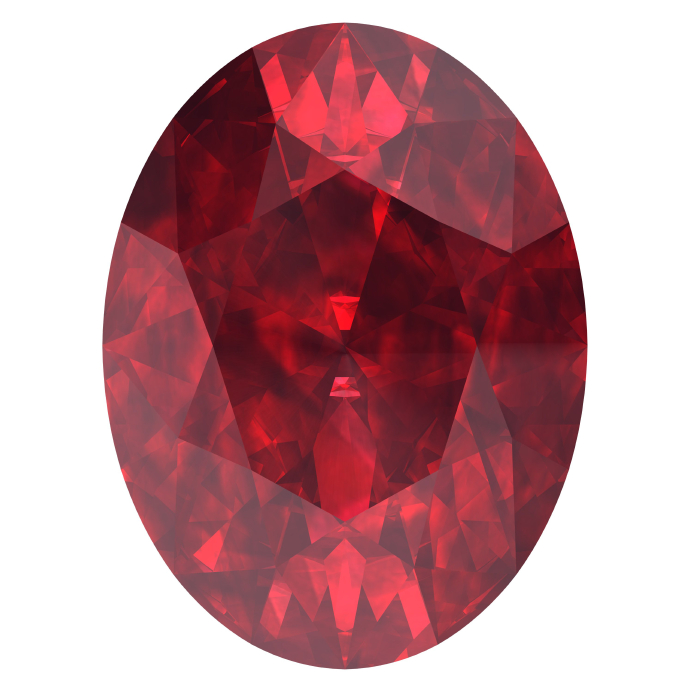
Ruby is red corundum colored by chromium, and Pink Sapphire is pink corundum colored by a little less chromium than Ruby. The difference is this: Ruby has a little less than 1% chromium and Pink Sapphire generally has about 1/2 of that.

Now, here is where it gets interesting. What happens in the gems that don’t know enough to fit squarely in one camp or another? Well, some Pink Sapphires get close to red and some Rubies have apparently had a brush with Clorox and come up a little pale to be considered “red.”

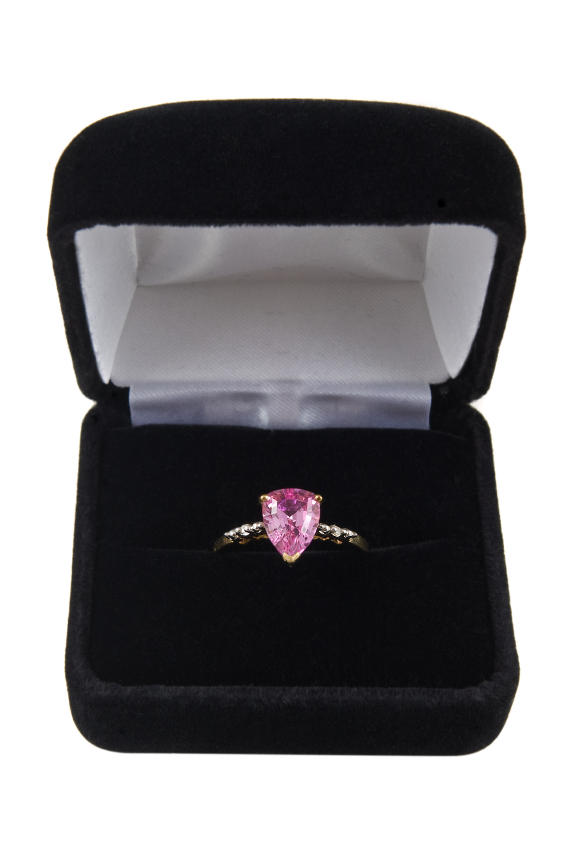
Some of the best fun we’ve had was in the late 90’s when we would buy some of the more pale Burmese Rubies that were cut a little chunky on the bottom in what they call a “mixed cut.” The mixed cut would have a heavy rounded bottom in an effort to conserve color. We would buy these, cut the bottom to a “brilliant” bottom pretty much like a diamond is cut, lose a bunch of color and have the prettiest, darkest hot pink sapphires we’ve ever seen.

Sometimes things that are between the lines of common definition are the best!

Pink sapphire ring


Follow us on Facebook >

© Ramseygems.com, Inc., 2014. Unauthorized use and/or duplication of this material without express and written permission from John and Laura Ramsey is strictly prohibited. Excerpts and links may be used, provided that full and clear credit is given to johnandlauraramsey.com with appropriate and specific links back to this original content.

John and Laura Ramsey talk about Tanzanite and Tsavorite

gem pictures 022

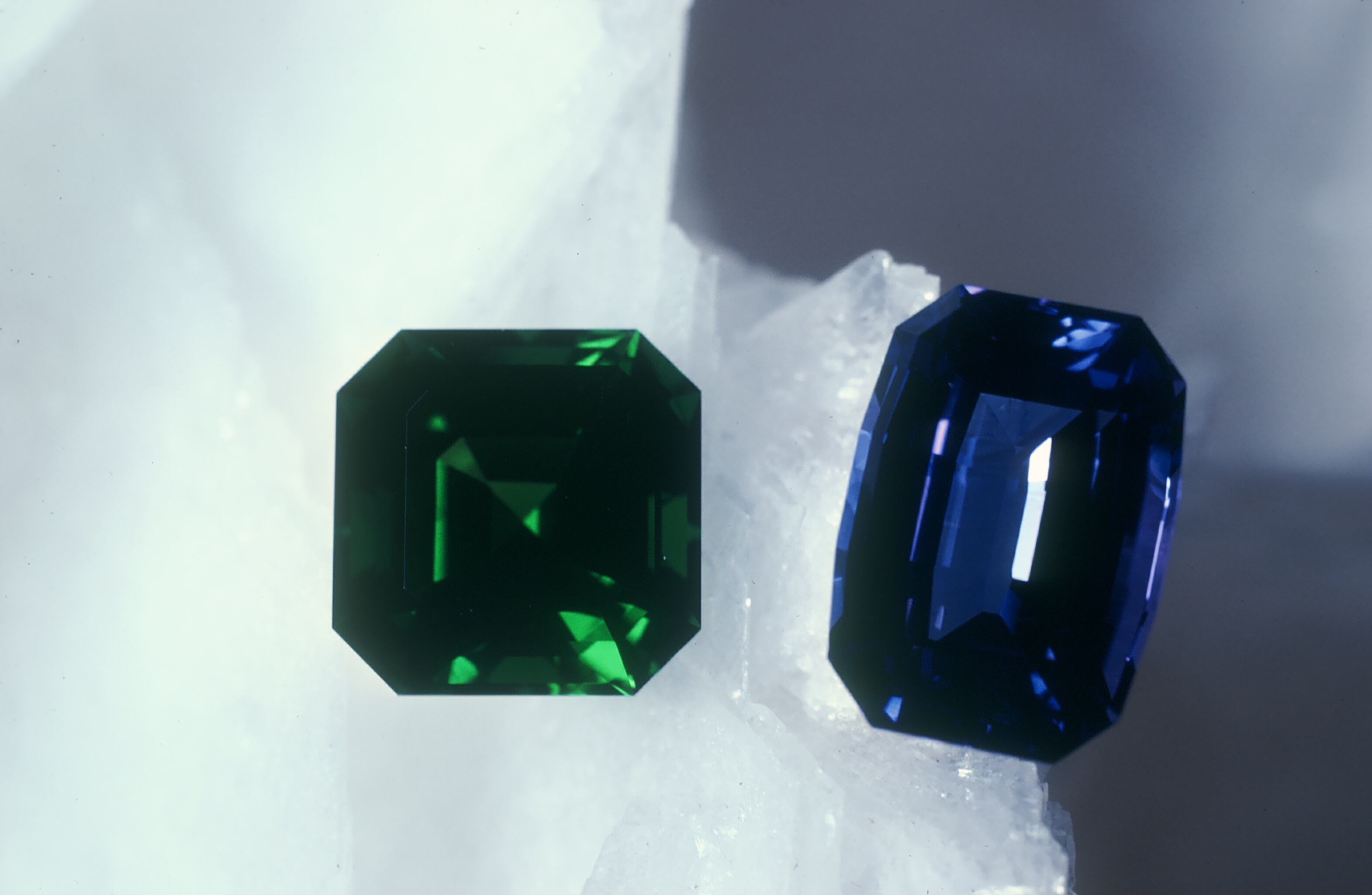
A couple of gems that we really love come from East Africa. Our first trip overseas together as young marrieds was to East Africa in early 1977. We were early adopters to East African gems and Tanzanite and Tsavorite were on our list even back then. We were dealing directly with miners in the region. As you can see from the photo there is a good reason the entire population of the earth immediately fell in love with these two gems.

While it is normal for Tanzanite to occur in larger sizes it is quite unusual for Tsavorite to come in larger sizes like the 6 carat gem in the photo. This is especially true for larger sizes in good colors. Some times Tsavorite is too dark or too light in the larger sizes. The piece featured is a “Goldilocks Just Right” color. If you haven’t added these two beauties to your collection you might want to save up. They’re worth it!


Follow us on Facebook >

© Ramseygems.com, Inc., 2014. Unauthorized use and/or duplication of this material without express and written permission from John and Laura Ramsey is strictly prohibited. Excerpts and links may be used, provided that full and clear credit is given to johnandlauraramsey.com with appropriate and specific links back to this original content.

John and Laura Ramsey talk about Pearl for June

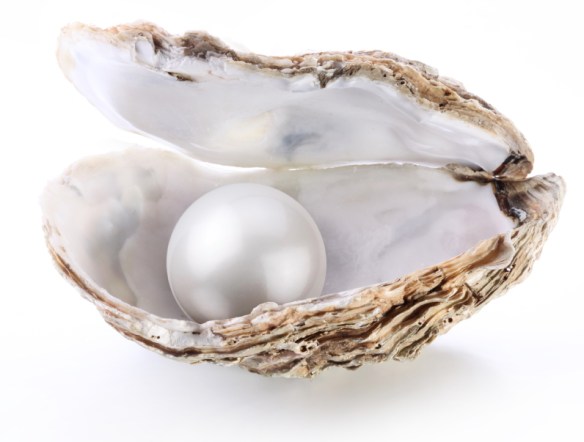
Image of a white pearl in a shell on a white background.Most people are very familiar with the pearl as one the birthstones for June. Alexandrite and Moonstone are the other two gemstones. Pearl, with its variety of color and shapes, is an organic gem loved and treasured for centuries. It is said that the Romans built armies from the sale of a single pearl while poems abound about its transcendent beauty.

The pearl was selected as a birthstone for June by the American National Association of Jewelers in 1912. Not only can you select your favorite pearl as a birthstone, you can also receive a pearl for your 3rd, 12th and 30th wedding anniversaries. The allure of pearls is far reaching.

Pearl is considered to be organic since it is formed inside mollusks such as oysters and the mussel. An irritant, perhaps a bit of sand or a stone, can get inside the shell. Nacre is then secreted around this irritant creating a lustrous substance. Layers upon layers overlap to create an iridescent luster. A pearl can take up to 8 years to be created. Principal oyster beds are in The Persian Gulf, the Indian Ocean primarily along the coasts of Sri Lanka and India, as well as the Red Sea. Japanese pearls are found near the coast in salt water. Polynesia coasts and Australia produce cultured pearls.

Types of pearls are extensive ranging from the natural to cultured (when the irritant is placed by man inside the living oyster), to baroque, Biwa, blister, black, Freshwater pearls, seed and mabe pearls. China and Japan cultivate freshwater and cultured pearls. Freshwater pearls also occur in the rivers of Germany, Austria, Scotland, Ireland, France and the USA (Mississippi). Colors range from white and creams to pinks and iridescent black.


Follow us on Facebook >

© Ramseygems.com, Inc., 2014. Unauthorized use and/or duplication of this material without express and written permission from John and Laura Ramsey is strictly prohibited. Excerpts and links may be used, provided that full and clear credit is given to johnandlauraramsey.com with appropriate and specific links back to this original content.